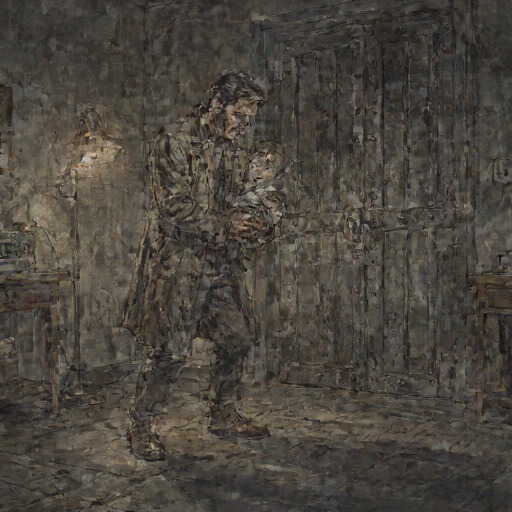
when Travis was five
A Childhood Promise
At five years old, [Travis McCoy](entity:character-recall-character-travis-mccoy-0dc0aed6bfdc) went with [Russ McCoy](entity:character-recall-character-russ-mccoy-05c3ffb27cd7) to [Austin, Texas](entity:location-recall-location-austin-texas-f5ebd91bdbb2), to watch [Clarendon High School](entity:location-recall-location-clarendon-high-schoo-c9a6da487194) win its first state football championship. The crowd, the game, and his father’s encouragement planted the dream that would shape Travis’s life.
the opening of the story
The Shoulder Injury
A hard hit during a game left [Travis McCoy](entity:character-recall-character-travis-mccoy-0dc0aed6bfdc) with a serious shoulder injury. His friend and team trainer, Cal Hendricks, diagnosed an AC separation and said the damage meant Travis had to go on injured reserve for the rest of the season.
three days after the injury
A Homecoming Invitation
While sorting his mail, Travis found a letter from [Clarendon High School](entity:location-recall-location-clarendon-high-schoo-c9a6da487194) inviting him to its week-long homecoming celebration. Principal [Jack Garrison](entity:character-recall-character-jack-garrison-3c0beb2907b2) explained that the current players saw Travis as an inspiration and wanted him to come home.
about one month later
The Decision to Return
After considering Cal’s advice that he could always return home, Travis booked a flight to [Texas](entity:location-recall-location-texas-f19b16f8e87c) without replying to the invitation. He hoped that facing the town he had left behind might help him understand what to do with a life suddenly no longer centered on football.
the day Travis left Miami
The Road Back
At the airport, Travis remembered leaving [Penelope Stone](entity:character-recall-character-penelope-stone-9f2fd54a48f6) ten years earlier, after ending their relationship rather than trying to make a long-distance romance work. He had not known then that she was pregnant, and the memory made the journey home feel more daunting than his injured future.
the day Travis arrived in Amarillo
An Uneasy Reunion with Russ
[Russ McCoy](entity:character-recall-character-russ-mccoy-05c3ffb27cd7) picked Travis up at the airport, and their reunion was strained by a decade of distance and unresolved anger. Travis’s luggage had gone missing, leaving him and his father to make the drive to [Clarendon](entity:location-recall-location-clarendon-856bf2bd252e) with little to say to each other.
Travis’s first afternoon back in Clarendon
Bertha in the Barn
At the ranch, Travis found that his childhood room remained much as he had left it, and old resentment toward Russ resurfaced. He then discovered that Russ had kept [Bertha](entity:object-recall-object-bertha-df502d0417d3), his late mother’s 1966 Pontiac, waiting for him in the barn.
that evening at the homecoming pep rally
The Son He Never Knew
Travis slipped into the crowded school gym and was asked to sign a football by a boy named [Max](entity:character-recall-character-max-5ccbd63edbb6). Penelope rushed in and called the boy her son; when Max called her Mom, Travis realized the child was about ten years old and that the timing pointed to him being the father.
immediately after the gym encounter
The First Confrontation
Before Travis could question Penelope, [Jack Garrison](entity:character-recall-character-jack-garrison-3c0beb2907b2) arrived and welcomed him to the school. Penelope left with [Max](entity:character-recall-character-max-5ccbd63edbb6), while Travis was left to absorb the revelation that the woman he had never stopped loving had raised a son without him.
later that first evening
A Father’s Anger
Travis confronted Russ and demanded to know whether he had suspected [Max](entity:character-recall-character-max-5ccbd63edbb6) was his son. Russ admitted he had wondered but had not been certain, and their argument widened into years of bitterness over Russ’s absence after Loralie’s illness and death.
the following morning
Meeting Max at the Track
After running at the high school track, Travis found [Max](entity:character-recall-character-max-5ccbd63edbb6) waiting in the bleachers with his football. Max talked about his mother’s admiration for Travis and repeated the advice he had taken from Travis’s games, deepening Travis’s sense of connection to a boy he had only just met.
later that morning
Penelope Tells Her Story
At Loralie’s grave, Penelope told Travis she had discovered her pregnancy after he left and had driven to [Austin](entity:location-recall-location-austin-208e01a2a58e) to tell him. Seeing him apparently happy with his new teammates, she lost her nerve and chose to raise [Max](entity:character-recall-character-max-5ccbd63edbb6) without disrupting the career she believed Travis wanted more than a family.
during the cemetery conversation
A Love Still Alive
Travis asked whether Penelope still loved him, and she admitted that she had never stopped, though she feared it was too late for them. She fled before they could resolve what her confession meant, leaving Travis shaken by the possibility that their old relationship might still have a future.
that evening
Russ Opens Up
Russ showed Travis photographs and spoke about how deeply he still missed Loralie. He described staying beside her through her illness, while Travis finally explained how alone he had felt as a child watching his mother die.
the same evening
The Father and Son Reconcile
Russ apologized for failing to tell Travis that he was proud of him, and Travis told his father that he had always needed him. They shared supper and began to repair a relationship that had been shaped by grief, silence, and mistaken assumptions.
two days after Travis arrived
A Difficult Conversation at Penelope’s
Travis went to Penelope’s house to discuss [Max](entity:character-recall-character-max-5ccbd63edbb6) and the years they had lost. Penelope said she had feared Travis would put football first, but she also admitted that she had denied him the chance to choose for himself whether to become a father.
later that morning
A Place in Max’s Life
Penelope invited Travis to watch [Max](entity:character-recall-character-max-5ccbd63edbb6)’s football practice and have dinner with them afterward. She warned him not to encourage Max’s hopes unless he truly intended to stay involved, and Travis promised he would take the commitment seriously.
that afternoon
A Father Watches Practice
At practice, [Max](entity:character-recall-character-max-5ccbd63edbb6) proudly introduced Travis to his teammates, and Travis watched him tackle a much larger boy with determination. He later played catch with Max, discovering that an ordinary father-and-son moment carried the weight of all the years he had missed.
dinner after practice
Max Names His Father
During dinner, [Max](entity:character-recall-character-max-5ccbd63edbb6) abruptly asked Travis when he had planned to tell him that he was his father. Max explained that he had worked it out from the photographs and his mother’s reactions to Travis’s games, and welcomed Travis as family while warning him not to hurt Penelope.
during the days before homecoming
The New Family Takes Shape
Travis spent more time with [Max](entity:character-recall-character-max-5ccbd63edbb6) and Penelope, while Russ began rebuilding his own connection with them. At the school pep rally, Max asked Russ to be called Gramps, a small but moving sign that the family’s old divisions were beginning to soften.
at the homecoming rally
A Speech for the Broncos
Travis addressed [Clarendon](entity:location-recall-location-clarendon-856bf2bd252e)’s players and supporters, telling the team that the people in the stands were the ones whose dedication made the game matter. His speech reframed the boys as an inspiration to him, not merely as youngsters inspired by his professional career.
homecoming game night
Leading the Team Onto the Field
At [Jack Garrison](entity:character-recall-character-jack-garrison-3c0beb2907b2)’s request, Travis led the Broncos out through the tunnel and spoke to them on the field about earning the community’s respect. The homecoming crowd welcomed him warmly, and Travis recognized how much it meant to be back among the people he had once left behind.
during the homecoming game
A Kiss at Homecoming
As Travis sat with Penelope, Russ, and [Max](entity:character-recall-character-max-5ccbd63edbb6), his old feelings for Penelope came into the open. He told her he still loved her, and she confessed that she loved him too; they kissed as their family watched the Broncos play.
the morning after homecoming
Travis Chooses Home
After spending the night with Penelope, Travis received a call from [Stewart Thornton](entity:character-recall-character-stewart-thornton-8b6f73e00982) offering him a coaching position with the [Miami](entity:location-recall-location-miami-28b8b009fa19) team. He refused the job, explaining that his life and future were now in [Texas](entity:location-recall-location-texas-f19b16f8e87c) with Penelope and [Max](entity:character-recall-character-max-5ccbd63edbb6).
immediately after the call
A Promise to Stay
[Max](entity:character-recall-character-max-5ccbd63edbb6) feared that Travis’s decision meant he would leave again, but Travis assured him he was choosing to remain with his family. Penelope questioned whether he could truly give up [Miami](entity:location-recall-location-miami-28b8b009fa19); Travis said he would stay in [Clarendon](entity:location-recall-location-clarendon-856bf2bd252e) and work through his renewed relationship with Russ as well.
the following weeks
Goodbye to Miami
Travis returned to [Miami](entity:location-recall-location-miami-28b8b009fa19) with Russ to settle his affairs, end his contract, and pack his apartment. At the Sharks’ stadium, he visited Cal and told him that he was retiring from professional football to return to Penelope and [Max](entity:character-recall-character-max-5ccbd63edbb6).
during Travis’s final days in Miami
Dinner with Cal and Anna
Travis and Russ met Cal’s girlfriend, [Anna Ruiz](entity:character-recall-character-anna-ruiz-f11e6d9e086f), and heard about her determination to raise her younger brother, [Ben Ruiz](entity:character-recall-character-ben-ruiz-2515ac2f475a), after their parents’ deaths. Russ welcomed Anna warmly, while Travis was briefly hurt when Russ called Cal a son before Russ assured Travis that he had always been his own son.
near the end of Travis’s stay in Miami
Max’s School Fight
Penelope called to say that [Max](entity:character-recall-character-max-5ccbd63edbb6) had been suspended after fighting boys who mocked Travis for quitting football. Travis told Max that defending him did not make fighting the right choice and explained that he was leaving the spotlight because his family mattered more than his public image.
the day before leaving Miami
Farewell to the Team
Travis visited his teammates and explained that he had only recently learned he had a son. He chose his family over the game, while urging the team to trust [Malcolm Rollins](entity:character-recall-character-malcolm-rollins-68df57a3b1c8) as its new quarterback and telling head coach [James Jorkins](entity:character-recall-character-james-jorkins-1fc188760819) that he did not regret leaving.
the day Travis began the trip home
The Airport Confrontation
Mechanical trouble repeatedly delayed Travis and Russ’s flights, and an angry passenger assaulted a young airline employee. Travis restrained the man and asked security to intervene, showing the calm protective instinct that had come to define him beyond the football field.
during the Chicago layover
Travis Refuses to Leave Russ
In [Chicago](entity:location-recall-location-chicago-eb77a855d5aa), the airline offered Travis a seat on a flight that could not accommodate Russ. Travis gave up the seat rather than abandon his father, and the two waited together for another chance to travel, recognizing how far their relationship had come.
the next several days
A Long Journey Home
More delays forced Travis and Russ to stay in [Dallas](entity:location-recall-location-dallas-bff7e73ac6cf) before they could continue to [Amarillo](entity:location-recall-location-amarillo-5421c18aef47). On the flight at last, Travis endured an uncomfortable encounter with an overfamiliar fan and concentrated on getting back to the family waiting in [Clarendon](entity:location-recall-location-clarendon-856bf2bd252e).
after the sixteen-and-a-half-day journey
The Family Reunites
When Russ’s truck reached Penelope’s house, Penelope and [Max](entity:character-recall-character-max-5ccbd63edbb6) rushed out to meet Travis. He embraced them both at once, and Russ understood that his son’s family mattered more than the luggage he had carried home.
after Travis returned to Clarendon
The Championship Trip
Travis took Penelope and [Max](entity:character-recall-character-max-5ccbd63edbb6) to [Austin](entity:location-recall-location-austin-208e01a2a58e) to watch the [Clarendon](entity:location-recall-location-clarendon-856bf2bd252e) team compete for the state championship. Their journey brought Max into the stadium where Travis had first fallen in love with football, turning the trip into a shared family tradition.
the state championship game
The Broncos’ Comeback
The Broncos fell behind the larger Seymour Panthers, and Travis went to the locker room at halftime to encourage the team to play with heart. They fought back and scored a late touchdown, then chose a two-point conversion rather than settling for an extra point.
immediately after the championship
A Father’s Thanks
The Broncos completed the two-point conversion and won the state title. [Max](entity:character-recall-character-max-5ccbd63edbb6) embraced Travis and thanked him for coming home; Travis answered that Max had brought him home, confirming how completely his priorities had changed.
five months after Travis returned
Travis Proposes
Travis took Penelope back to the school gym where their first teenage romance had begun, arranged a meal, and asked her to marry him. She accepted, and Travis placed the engagement ring on her finger.
the morning after the proposal
Loralie’s Recordings and Russ’s Letter
Russ left Travis a letter alongside Loralie’s home videos. The recordings brought back memories of Loralie’s love and support, while Russ’s letter confessed the regret and affection he had carried for his son; Travis finally accepted that his father loved him.
later that week
Meeting Penelope’s Parents
[Sherman Stone](entity:character-recall-character-sherman-stone-cd01f7fbfb8d) and [Wanda Stone](entity:character-recall-character-wanda-stone-ac68a581d0e6) arrived unexpectedly and teased Travis about the hurt he had caused their daughter. Travis acknowledged his past mistakes, while Penelope’s parents made clear that her happiness and [Max](entity:character-recall-character-max-5ccbd63edbb6)’s well-being mattered more than their old resentment.
the following weeks
Max Takes the McCoy Name
Travis told Penelope he wanted [Max](entity:character-recall-character-max-5ccbd63edbb6) to share his surname, and she agreed. The legal change made [Max McCoy](entity:character-recall-character-max-mccoy-c08acb5c8749)’s place in Travis’s family public and formal, though their father-and-son bond had already begun to grow.
after the name change
A Coaching Opportunity
[Coach Reynolds](entity:character-recall-character-coach-reynolds-0aae58e96c72) and [Jack Garrison](entity:character-recall-character-jack-garrison-3c0beb2907b2) offered Travis the head-coaching position at [Clarendon High School](entity:location-recall-location-clarendon-high-schoo-c9a6da487194) as Reynolds prepared to retire for health reasons. Travis doubted whether he could teach, but Penelope encouraged him to see coaching as a chance to pass on his love of the game.
the following morning
A New Career Chosen
After seeing [Max](entity:character-recall-character-max-5ccbd63edbb6)’s excitement about learning football from him, Travis accepted the coaching job. He began studying for the [Texas](entity:location-recall-location-texas-f19b16f8e87c) teacher certification exam, committing himself to a new life that joined his love of football with his responsibility to his family.
during Travis’s exam preparation
The School Dance
Travis and Penelope chaperoned [Max](entity:character-recall-character-max-5ccbd63edbb6)’s school dance and watched him ask [Jana Crosby](entity:character-recall-character-jana-crosby-3aca068be7c0) to dance. The evening made his parents laugh at his first serious crush and offered another glimpse of how quickly their son was growing up.
about two months after Travis accepted the job
The Teacher Examination
Travis took the certification exam at [Clarendon College](entity:location-recall-location-clarendon-college-90f37361091e), with Russ proctoring under [Jack Garrison](entity:character-recall-character-jack-garrison-3c0beb2907b2)’s supervision. The test was difficult, and Travis left uncertain whether he had done enough to earn the qualification he needed for the position.
the day Travis took the exam
A Shared Birthday Celebration
When Travis returned home, [Max](entity:character-recall-character-max-5ccbd63edbb6) had organized a surprise birthday celebration for the two of them, since it was their first birthday together as father and son. Max told Travis that he had wished for his presence every year, turning the party into a joyful acknowledgment of the years they had lost.
about one month after the exam
Travis Passes
Russ brought Travis the results: he had passed the certified-teacher examination with a score of 98.3 percent. The relief released weeks of anxiety, and Travis thanked his family for sustaining him through the uncertainty.
shortly before Travis and Penelope’s wedding
Cal and Anna’s Wedding News
Cal Hendricks arrived with Anna, now [Anna Hendricks](entity:character-recall-character-anna-hendricks-5e32ce2f15f6), and revealed that they had eloped on Valentine’s Day with Ben present. Their news prompted laughter and celebration, and Russ jokingly took on a protective father’s role toward Anna.
June 1
Travis and Penelope Marry
Travis and Penelope married on the [Clarendon](entity:location-recall-location-clarendon-856bf2bd252e) football field, on the fiftieth-yard line where the game had shaped both their lives. [Max](entity:character-recall-character-max-5ccbd63edbb6) helped walk his mother to Travis, and the ceremony joined the three of them as a family in front of their loved ones.
the Christmas after Travis and Penelope’s wedding
Russ Proposes to Nadine
Russ proposed to [Nadine](entity:character-recall-character-nadine-b454447ac3aa) on [Christmas](entity:time-recall-time-christmas-a573265d0167) morning, and she showed the family her engagement ring. Travis was glad that his father could love again without forgetting Loralie, and welcomed Nadine’s place in the family.
the following spring break
Russ and Nadine Marry
The family traveled to [Red River](entity:location-recall-location-red-river-7da40dc09799), [New Mexico](entity:location-recall-location-new-mexico-0af075bec0dc), for Russ and [Nadine](entity:character-recall-character-nadine-b454447ac3aa)’s small wedding. Travis walked Nadine across a covered bridge and placed her hand in Russ’s, while Penelope and [Max](entity:character-recall-character-max-5ccbd63edbb6) stood with them to witness the marriage.
at Russ and Nadine’s wedding
A Second Pregnancy Revealed
After the ceremony, Penelope told Travis that she was pregnant again. The news overwhelmed him with joy because this time he could be present for every part of the pregnancy and welcome the child from the beginning.
a few weeks later
The First Prenatal Appointment
Travis accompanied Penelope to her first prenatal appointment with Edward Chan. The examination and sonogram confirmed that the pregnancy was progressing well, and the couple saw their baby’s heartbeat together.
Mother’s Day
Max Learns He Will Be a Brother
Travis and Penelope gave [Max](entity:character-recall-character-max-5ccbd63edbb6) a small football jersey and cheerleader outfit that announced he would become a big brother. Max was moved by the news and accepted that the baby might be either a brother or a sister.
later on Mother’s Day
The Family Shares the News
At dinner with Russ and [Nadine](entity:character-recall-character-nadine-b454447ac3aa), Penelope and Travis revealed the pregnancy with an ultrasound image. Nadine was delighted to be called Grandma, and the family celebrated the new baby together.
during summer break, when Penelope was sixteen weeks pregnant
A Visit to Miami
Travis took Penelope and [Max](entity:character-recall-character-max-5ccbd63edbb6) to [Miami](entity:location-recall-location-miami-28b8b009fa19) and arranged a tour of the stadium where he had played. Max was thrilled to see the locker room and meet the players, while Penelope’s pregnancy made Travis attentive to her comfort.
during the stadium visit
Malcolm’s Trade
Travis learned that [Malcolm Rollins](entity:character-recall-character-malcolm-rollins-68df57a3b1c8) was being traded to [Denver](entity:location-recall-location-denver-bd410fc030e8) and found him distressed in the locker room. Travis encouraged Malcolm to trust his ability and build a new home with the team that had acquired him.
July 4
The Fourth of July in Colorado
In [Colorado](entity:location-recall-location-colorado-e0fc68fd7477), Travis and Penelope spent time with Sherman and [Wanda](entity:character-recall-character-wanda-8f1416f63009) while [Max](entity:character-recall-character-max-5ccbd63edbb6) helped prepare for a family gathering. The family watched fireworks together, and Max spoke tenderly about wanting Jana to see the night sky.
August 5
The First Day of Practice
Travis began a new high school football season and delivered a speech asking his players for time, passion, heart, and soul. [Max](entity:character-recall-character-max-5ccbd63edbb6) joined the practice, pushing himself to keep up with older players despite the heat and strain.
during the fall season
The Broncos’ Last-Second Win
The Broncos defeated the Wellington Skyrockets with a final play that crossed the goal line just as time expired. Travis was proud of his players’ effort, and their victory set the hopeful tone for the family gathering he and Penelope had planned.
when Penelope was twenty-seven weeks pregnant
The Highway Collision
On the way to a medical appointment, a slowing truck forced Travis to brake and swerve; the family vehicle clipped the truck and spun into a roadside ditch. Penelope felt abdominal pain, and Travis’s fear turned to panic as he rushed to get her medical help.
at the hospital after the collision
Their Daughter Is Safe
Edward Chan examined Penelope and found no sign of labor or serious injury, though the seat belt had bruised her. An ultrasound confirmed that the baby was well, and the couple learned they were expecting a daughter.
when Penelope was thirty-one weeks pregnant
A Daughter’s Announcement
At a family lunch, Travis and Penelope gave their relatives small gifts marked with clues about the baby. [Max](entity:character-recall-character-max-5ccbd63edbb6) realized he was getting a sister, and the family celebrated the news together.
Thanksgiving, when Penelope was thirty-seven weeks pregnant
A New Baby Arrives
Penelope’s water broke at home, and Travis rushed her to the hospital as Russ, [Nadine](entity:character-recall-character-nadine-b454447ac3aa), and [Max](entity:character-recall-character-max-5ccbd63edbb6) followed. After hours of labor, Penelope gave birth to a healthy daughter, whom Travis named Loralie in honor of his mother.
the day after the birth
The Family Holds Loralie
Travis returned to Penelope’s hospital room, where [Max](entity:character-recall-character-max-5ccbd63edbb6) was waiting beside his mother. He gave Penelope a yellow rose and Max a football game, then placed their newborn daughter in Penelope’s arms and told her that she had given him a family.